
Before my husband di3d,
PART 3 AND FULL STORY: Before my husband di3d, he made one final request. 002
PART 3
The second envelope felt heavier than paper should have felt.
It rested between Eleanor and me on the faded wooden table, sealed with dark blue wax and bearing my name in Zane’s unmistakable handwriting.
MARTHA — READ ONLY AFTER ELEANOR KNOWS.
My husband had planned this moment.
That realization chilled me more than the confession I had already read.
Eleanor folded her hands tightly in her lap. “Zane gave that to me thirty-five years ago.”
I stared at her.
“What?”
“The week after the accident.” Her voice trembled. “He told me to keep it somewhere safe. He said that one day, somebody might come looking for it.”
“Who?”
“I don’t know. He never told me.”
Outside, wind scraped dry branches against the window. Each tap sounded like a fingernail against glass.
I broke the wax.
Inside were three things: a handwritten letter, an old brass key, and a photograph.
The picture showed Zane standing outside a weathered stone building. He appeared to be in his late forties. Beside him stood a thin woman with silver beginning to streak her dark hair.
A jagged scar crossed the woman’s forehead.
On the back, Zane had written:
BLACKWATER HOUSE — OCTOBER 2004.
Beneath it were five words that stopped my heart.
Eleanor, your sister is alive.
The photograph slipped from my fingers.
Eleanor caught it before it hit the floor.
For several seconds, she stared without breathing.
Then a small, wounded sound escaped her.
“No.”
She brought the photograph closer to her face.
“No, this isn’t possible.”
“Is that her?”
Eleanor shook her head violently, yet tears were already streaming down her cheeks.
“My sister died.”
“Look at her.”
“I buried her!”
“Did you see the body?”
The question silenced her.
Eleanor’s mouth opened, but no answer came.
Finally, she whispered, “My father said her injuries were too severe. He told me the coffin had to remain closed.”
A terrible understanding began gathering between us.
I unfolded Zane’s letter.
Martha,
By the time you read this, you will already know the worst thing I ever did. You will know that I was driving. You will know Eleanor sacrificed her name and her future to keep me out of prison.
But you do not yet know what her father did.
I looked at Eleanor. Her face had become ashen.
The letter continued.
Lillian survived the crash.
She suffered a serious head injury and remained unconscious for nearly three weeks. She was also pregnant.
Eleanor’s fingers tightened around the photograph.
“Pregnant?”
Her father discovered the pregnancy at the hospital. Lillian was unmarried, and the child’s father had disappeared months earlier. Horace believed the scandal would destroy the family’s reputation.
He used my fear against me.
He told me that if I remained silent about Lillian, he would make certain I was never charged. In return, he arranged for her to be transferred under her mother’s maiden name to a private neurological facility.
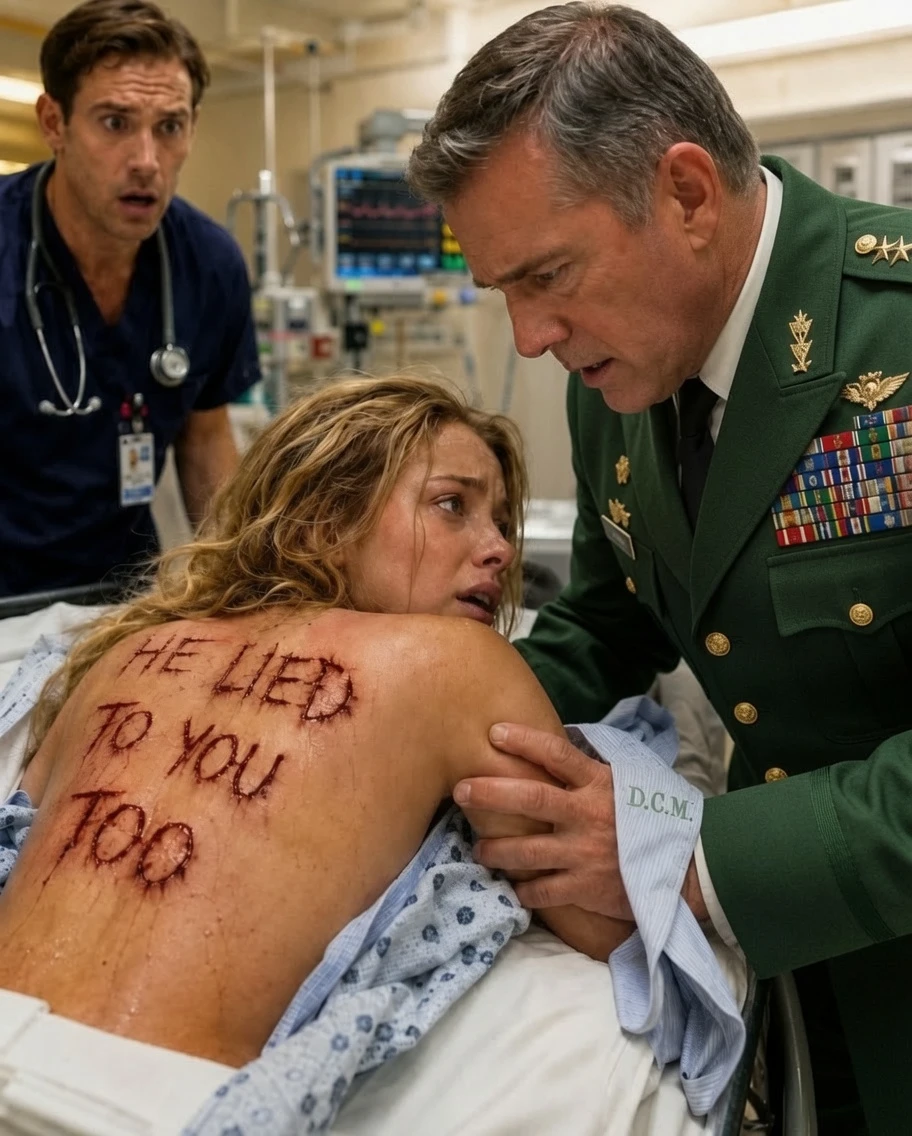
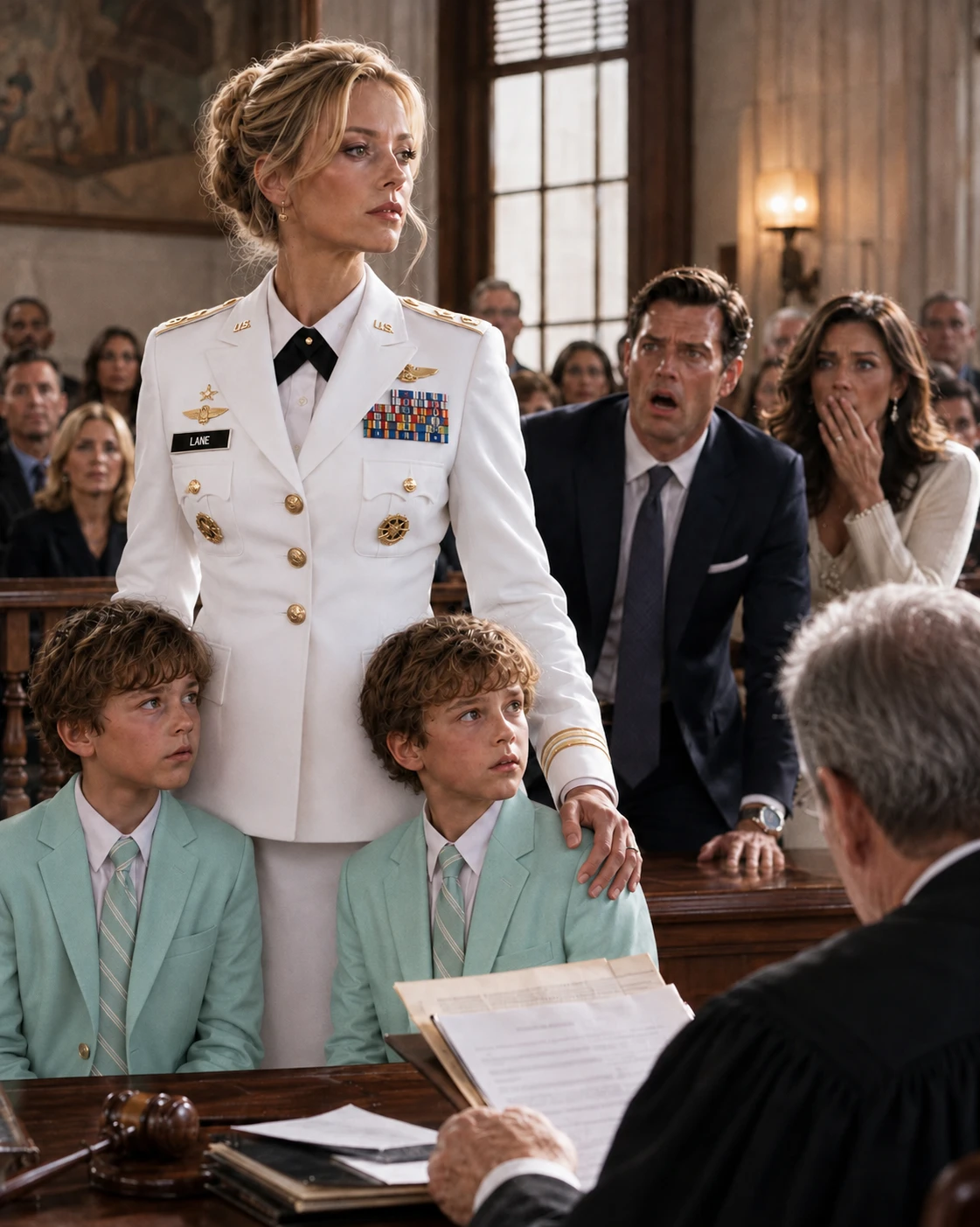
He told Eleanor that Lillian had died.
The room seemed to tilt.
Eleanor rose so suddenly that her chair crashed backward.
“My father would never—”
But she could not finish.
Perhaps because a part of her already knew he could.
I kept reading.
Lillian woke with severe memory loss. She remembered pieces of childhood but not her surname, her home, or Eleanor.
The baby, a girl, survived.
Eleanor covered her mouth.
Horace placed the child for adoption. He visited Lillian twice, then abandoned her at the facility. He paid the bills until his death, but he never told either daughter the truth.
I signed the transfer documents as a witness.
That signature has haunted me every day since.
Eleanor sank back into her chair.
Her eyes were no longer fixed on me.
They were staring thirty-five years into the past.
“I went to her grave every Sunday for six years,” she whispered. “I brought yellow roses because they were her favorite.”
I forced myself to continue.
In 2004, while helping a client review records connected to the sale of Blackwater House, I found her name.
Lillian was alive.
I went to see her.
She remembered Eleanor only as a girl singing beside a lake.
She had spent years searching for that girl.
The last paragraph had been written with heavier pressure, as if Zane’s hand had shaken.
I was a coward again. I told Lillian only that I had known her family. I promised I would bring Eleanor to her.
I never did.
The key opens a metal box inside Room 17 at Blackwater House. Everything Horace hid is there: hospital records, adoption papers, and the name of Lillian’s daughter.
Her daughter has been searching for those documents for years.
Please finish what I was too ashamed to finish.
Please reunite the sisters I helped separate.
And Martha—whatever you decide about the man I was, never doubt that loving you was the truest thing I ever did.
Zane.
The letter fell into my lap.
For thirty-four years, I had slept beside a man who woke each morning carrying an entire graveyard inside him.
He had loved me.
I believed that.
But love had not made him brave.
Eleanor reached for the brass key.
“Where is Blackwater House?”
I turned over the photograph.
An address had been written beneath the date.
Blackwater Road.
Two hours north.
Eleanor stood.
Her tears had stopped.
“We’re going now.”
PART 4 — THE WOMAN WHO HAD BEEN DEAD FOR THIRTY-FIVE YEARS
The sky darkened before we reached Blackwater Road.
Neither of us spoke much during the journey.
Eleanor held the photograph on her lap as though it were something alive. Occasionally, her thumb moved across the woman’s face.
“I taught Lily to swim,” she said suddenly.
I kept my eyes on the road.
“She was terrified of deep water. I used to stand in the lake and tell her I would never let go.”
Her voice broke.
“But I did.”
“You were lied to.”
“I should have questioned him.”
“You were injured. You had lost your sister. You believed your father.”
“I let Zane’s guilt become mine.” She looked toward the darkening fields. “Perhaps I became so accustomed to carrying blame that I never thought to challenge anything.”
Blackwater House stood behind rusted iron gates at the end of an overgrown lane.
The building in Zane’s photograph had once been imposing, but years of neglect had hollowed it out. Ivy strangled its stone walls. Several windows were boarded over, and a weathered sign hung crookedly above the entrance.
BLACKWATER NEUROLOGICAL HOME — CLOSED BY STATE ORDER, 2008.
My stomach tightened.
“It’s abandoned,” I said.
Eleanor gripped the key. “Room 17 is still inside.”
We pushed through the unlocked gate.
The front door resisted at first, then opened with a groan that echoed through the empty building.
Dust floated through the beams of our flashlights.
The lobby still contained a reception desk, overturned chairs, and a row of metal filing cabinets with their drawers hanging open.
A wheelchair stood near the staircase.
One of its wheels turned slowly.
Eleanor froze.
“Did you see that?”
“It’s the wind.”
“There is no wind.”
Before I could answer, footsteps sounded above us.
Slow.
Deliberate.
Somebody was walking across the second floor.
“Hello?” I called.
The footsteps stopped.
A man’s voice answered from the darkness.
“You shouldn’t have come.”
Eleanor seized my arm.
A flashlight beam appeared at the top of the stairs.
A tall man descended slowly. He was perhaps forty, with tired eyes and rain dripping from his coat.
In one hand, he held a folder.
In the other, he held an old photograph.
“Who are you?” I demanded.
He looked directly at the envelope in my hand.
“My name is Daniel Mercer.”
Eleanor’s face changed.
“Mercer?”
“My adoptive name.”
He reached the bottom of the staircase.
“My birth certificate says I was born to a woman named Lillian Vale.”
Silence swallowed the lobby.
Eleanor stared at him as though the dead had risen twice.
Daniel looked at the photograph in her hands.
“You’re Eleanor.”
She nodded faintly.
He gave a bitter laugh.
“I’ve been looking for you for eighteen years.”
Eleanor’s knees seemed to weaken.
Daniel did not move to help her.
“I found my adoption papers after my mother died,” he continued. “Most of the original names were blacked out, but Lillian’s was still visible. I traced her to this place.”
“You said your birth mother was Lillian,” I said. “Zane’s letter said the baby was a girl.”
Daniel’s eyes shifted to me.
“That is what Zane believed.”
A chill ran through me.
“He was wrong?”
“The child born after the crash was a girl named Nora.”
“Then who are you?”
Daniel held up the photograph.
It showed Zane standing beside a young woman.
Eleanor.
On the back were written the words:
OUR SON — BORN TOO SOON.
Eleanor stared at it.
Then she slapped him.
The sound cracked through the abandoned lobby.
“Don’t you dare.”
Daniel did not react.
“You think Zane was my father?” he asked.
“No.”
“You think I’m trying to hurt you?”
“I think someone has filled your head with lies.”
Daniel slowly opened the folder.
Inside was a birth certificate.
He handed it to her.
Eleanor read the name, then stumbled backward.
The mother was listed as Eleanor Vale.
The father’s name was blank.
“I never had a child,” she whispered.
“You did,” Daniel said. “Seven months after the accident.”
“No.”
“You were pregnant when the crash happened.”
“No!”
“You suffered internal injuries. Your father arranged for the baby to be delivered early. Then he told you the pregnancy had ended.”
Eleanor’s face twisted with horror.
Fragments of memory appeared to strike her one after another.
Her hand moved instinctively toward her abdomen.
“I remember waking in pain,” she whispered. “My father said I had lost… He said there was nothing to bury.”
Daniel’s anger faltered.
For the first time, he looked less like an accuser and more like a child.
“He gave me away,” he said. “Just as he gave Nora away.”
The truth was larger than any of us had imagined.
Horace Vale had not hidden one child.
He had erased an entire generation.
“Where did you get these documents?” I asked.
“Copies from a former nurse. She told me the originals were hidden in Room 17.” Daniel’s gaze sharpened. “Zane removed them before the facility closed.”
“No,” I said. “He left a key.”
I held it up.
Daniel stared at the brass key.
“So he finally decided to confess.”
“He died last week.”
Something passed across Daniel’s face.
Not grief.
Not satisfaction.
Something unfinished.
“I wanted him to look at me,” he said quietly. “I wanted him to admit he knew I existed.”
Eleanor’s voice was barely audible.
“Was Zane your father?”
Daniel looked at her.
“The records don’t say.”
“But you believe he was.”
“I believed that was why he stayed silent.”
Eleanor closed her eyes.
Then she said the words I never expected.
“Zane could not have been your father.”
“How can you be certain?”
“Because Zane and I never slept together.”
Daniel stared at her.
“We were engaged,” she continued, “but my father was strict, and I was afraid of disappointing him. Zane wanted to wait until after the wedding.”
“Then who—”
A metallic crash exploded upstairs.
We all turned.
Someone else was inside Blackwater House.
And they had just found Room 17.
PART 5 — THE BOX BEHIND THE WALL
Daniel reached the staircase first.
We followed him through a corridor lined with peeling green paint and doors marked by tarnished brass numbers.
Room 17 stood open.
Inside, a figure in a dark coat was tearing wooden panels from the wall.
“Stop!” Daniel shouted.
The figure spun around.
It was an elderly man with white hair, a narrow face, and a crowbar gripped in both hands.
Eleanor gasped.
“Mr. Shaw?”
The man’s eyes widened.
“You remember me.”
“Gideon Shaw,” Eleanor whispered. “My father’s lawyer.”
Shaw glanced toward the hole he had opened in the wall.
A small metal box was visible inside.
Daniel lunged.
Shaw swung the crowbar, narrowly missing his shoulder. Daniel tackled him against the wall, and the crowbar clattered across the floor.
I grabbed the metal box.
The brass key fit perfectly.
Inside were dozens of documents bound with red ribbon, two hospital identification bracelets, a cassette tape, and a sealed legal statement.
One bracelet bore Lillian’s name.
The other bore Eleanor’s.
Shaw stopped struggling.
“It should have remained buried,” he rasped.
“Why?” Eleanor demanded. “To protect my father?”
“To protect all of you.”
“You stole my child!”
“Your father made that decision.”
“And you helped him.”
Shaw’s gaze dropped.
“He believed disgrace was worse than grief.”
Eleanor struck him again.
This time, Daniel caught her before she could collapse.
Shaw looked at the two of them.
“Zane tried to undo it.”
My heart lurched.
“What do you mean?”
“In 2004, he discovered Lillian was alive. He threatened to expose everything. Horace was dead by then, but the surviving trustees warned Zane that releasing the records could lead to criminal charges against the medical staff and invalidate both adoptions.”
“So he did nothing,” Daniel said bitterly.
“No,” Shaw replied. “He found both children.”
Daniel went still.
“He found me?”
“Zane located you in 2007. You were attending university in Vermont.”
Daniel’s expression fractured.
“My tuition,” he whispered.
Shaw nodded. “An anonymous foundation paid it.”
Daniel stepped backward as if struck.
I remembered the years Zane had claimed business expenses were higher than expected. The missing savings. The checks I had never questioned.
“He paid for Daniel’s education?” I asked.
“And Nora’s medical training.”
“Where is Nora now?”
Shaw looked toward the cassette in my hand.
“Listen.”
A dusty tape recorder sat on a shelf in the corner.
I inserted the cassette and pressed play.
Static filled the room.
Then Zane’s voice emerged.
Older.
Weary.
My name is Zane Whitmore. I am recording this on October 14, 2004.
My breath caught.
Lillian Vale survived the accident of June 8, 1989. Her father concealed her survival and arranged the adoption of two children—Lillian’s daughter, Nora, and Eleanor’s son, Daniel.
Daniel leaned toward the recorder.
Daniel’s father was not recorded because Eleanor refused to name him before the accident.
Eleanor began to cry.
“I remember,” she whispered.
Everyone looked at her.
She pressed both hands against her mouth.
“He wasn’t Zane.”
“Who was he?” Daniel asked.
Eleanor stared at her son.
“A young medical student named Thomas Mercer.”
Daniel’s entire body stiffened.
“Mercer?”
“He worked at my father’s clinic. We were in love, but my father despised him. He threatened to destroy Thomas’s career. When I became pregnant, I agreed to marry Zane because I believed it would protect everyone.”
I felt the last illusion of Zane and Eleanor’s romance dissolve.
Their engagement had been another secret built to conceal a secret.
“What happened to Thomas?” Daniel asked.
“My father told me he left the country.”
Shaw’s expression darkened.
“He did not leave.”
Eleanor turned toward him.
Shaw swallowed.
“Horace had him arrested for stealing narcotics from the clinic. The charges were fabricated. Thomas spent four years in prison.”
Daniel’s face became empty.
“Where is he now?”
Shaw looked at the floor.
“He has been searching for you.”
The tape continued.
Thomas Mercer was innocent. I knew Horace intended to frame him, and I said nothing because Horace had promised to conceal my role in the crash.
Zane’s recorded voice cracked.
Every life Horace damaged became part of the price of my silence.
A sound came from the doorway.
A woman stood there.
She wore a physician’s coat beneath a rain-soaked jacket. She appeared to be in her mid-thirties, with dark eyes and a jagged scar crossing her forehead.
The same scar as the woman in Zane’s photograph.
But this woman was far too young to be Lillian.
She looked at Eleanor.
“My name is Nora,” she said.
Then she turned toward me.
“And my mother disappeared three days ago.”
PART 6 — THE MEMORY THAT REFUSED TO DIE
Nora had Lillian’s eyes.
Even Eleanor saw it.
She crossed the room slowly and touched Nora’s cheek as though afraid the woman might vanish.
“You’re Lily’s daughter.”
Nora nodded.
“Zane found me when I was twenty-one. He never told me everything, but he paid for my medical school and helped me locate my mother.”
“You knew him?” I asked.
“He visited us every year.”
The words cut deeper than I expected.
While Zane had been telling me he was attending conferences, he had been sitting with the sister Eleanor believed dead.
Nora saw the pain on my face.
“He spoke about you constantly,” she said. “He kept your photograph in his wallet.”
“That does not make the lies disappear.”
“No,” she said softly. “It doesn’t.”
Eleanor gripped Nora’s hand.
“Where is Lillian?”
“She lived with me in a small town called Bellweather. Her memory returned gradually. She remembered the crash, the hospital, and a man threatening Zane.”
“Your grandfather,” Shaw said.
Nora’s eyes hardened.
“Three days ago, someone called my mother and told her Eleanor had died.”
Eleanor flinched.
“My mother left without telling me. She took the old lake photograph and a train schedule.”
Eleanor’s face changed.
“The lake.”
“What lake?”
“Saint Anne’s Lake,” she whispered. “Our family had a cottage there.”
Nora looked at the dark windows.
“The last train arrives in forty minutes.”
We left Shaw at Blackwater House after Daniel called the police.
The storm had worsened. Rain hammered the road as we drove toward Saint Anne’s Lake.
Daniel sat beside Eleanor in the back seat.
Neither spoke.
Their hands rested inches apart.
Two strangers connected by blood, betrayal, and a child stolen before either could remember the other.
Finally, Eleanor turned to him.
“I named you Matthew.”
Daniel looked at her.
“I don’t know why the records say Daniel. I called you Matthew when you moved inside me.”
His jaw tightened.
“My adoptive mother named me Daniel.”
“Was she kind?”
“She was wonderful.”
Relief and grief crossed Eleanor’s face simultaneously.
“Then I owe her everything.”
Daniel’s hand moved slightly.
His smallest finger touched hers.
Neither pulled away.
By the time we reached Saint Anne’s Lake, night had fallen.
The old Vale cottage had collapsed years earlier, but the dock still stretched over the black water.
A woman stood at its end.
She wore a pale coat.
Rain flattened her silver hair against her face.
“Lily!” Eleanor screamed.
The woman turned.
Lightning split the sky.
For one terrible instant, her face was illuminated—the scar, the hollow cheeks, the eyes filled with thirty-five years of searching.
Eleanor ran onto the dock.
“Lily!”
Lillian backed toward the edge.
“No,” she whispered. “You’re dead.”
“I’m alive.”
“He said you died.”
“Who told you?”
“The man on the telephone.”
Another step.
The wood creaked beneath her heel.
Eleanor stopped.
Then, very softly, she began to sing.
It was a simple childhood melody about a boat returning home.
Lillian’s face crumpled.
The song drifted across the rain.
Eleanor held out her hand.
“I told you I would never let go.”
Recognition exploded in Lillian’s eyes.
“Ellie?”
The name was barely a breath.
Eleanor sobbed.
“Yes.”
Lillian stumbled forward.
The sisters collided in the center of the dock, clinging to each other with the desperation of drowning women.
Nora covered her mouth.
Daniel turned away, wiping his eyes.
I stood in the rain and thought of Zane.
He should have been there.
He should have witnessed what truth could restore.
Then Lillian looked past Eleanor and saw me.
Her expression became terrified.
“You’re Martha.”
I nodded.
She reached inside her coat and pulled out a crumpled envelope.
“Zane sent this before he died.”
My name was written on it.
Again.
I opened it.
Inside was only one sentence.
The man who called Lillian is the person who caused the crash.
Behind us, a car door slammed.
Headlights flooded the dock.
Gideon Shaw stepped into the rain.
And in his hand was the crowbar from Blackwater House.
PART 7 — ZANE’S FINAL WITNESS
Shaw’s polished appearance had vanished.
Rain streamed down his face, and his eyes were wild.
“You should have left the past alone.”
Daniel stepped between him and the women.
“You caused the crash?”
Shaw laughed bitterly.
“Horace caused everything.”
“But you were driving the truck,” Lillian said.
Her voice was clearer now.
Stronger.
Shaw stared at her.
“You remember.”
“I remember your face through the windshield.”
The truth came in fragments.
Thirty-five years earlier, Lillian had discovered that her father was stealing from patient trust accounts at his clinic. She had planned to expose him after Eleanor’s rehearsal.
Horace sent Shaw to stop her.
Shaw followed their car, intending only to frighten them and retrieve the documents Lillian carried.
He drove too close on the narrow road.
Zane, distracted and impaired by alcohol, swerved.
Shaw’s truck crossed the center line.
The car struck a barrier and rolled.
“Zane believed the accident was entirely his fault,” Shaw said. “Horace encouraged him to believe it. Guilt made him obedient.”
“You let Eleanor confess,” I said.
“She chose to.”
“You hid Lillian.”
“Horace ordered it.”
“You stole two babies.”
“I prepared papers.”
“You destroyed five lives.”
Shaw’s face twisted.
“You think I don’t know that?”
He raised the crowbar.
Daniel did not move.
“Put it down,” he said.
Shaw’s gaze shifted toward the water.
“I spent thirty-five years protecting a dead man’s reputation.”
“No,” Eleanor replied. “You spent thirty-five years protecting yourself.”
Police sirens sounded faintly in the distance.
Shaw froze.
Daniel had activated the emergency call on his phone before stepping onto the dock.
Shaw turned to run.
His foot struck a broken plank.
The wood snapped.
He plunged through the dock and into the freezing water.
For one suspended second, nobody moved.
Shaw surfaced, choking.
“Help me!”
The current pulled him beneath the dock.
Daniel dropped to his knees.
The man who had helped steal his life reached upward through black water.
Daniel grabbed his wrist.
Eleanor seized Daniel’s coat. Nora and I held Eleanor.
Together, we pulled Shaw onto the dock.
He lay coughing as police lights approached through the trees.
Daniel stared down at him.
“I did not save you because you deserved it,” he said. “I saved you because I refuse to become another man controlled by what you did.”
Shaw began to cry.
At the police station, he gave a full confession.
The original evidence hidden at Blackwater House supported every detail. Horace’s financial crimes, the falsified medical transfers, the illegal adoptions, and Thomas Mercer’s fabricated charges were finally exposed.
Just before dawn, an officer entered the waiting room.
“Mr. Mercer?”
Daniel rose.
“A man has arrived asking for you.”
An elderly gentleman stood in the corridor.
He was tall but stooped, leaning heavily on a cane. His eyes moved past all of us and settled on Daniel.
“Matthew?”
Daniel stopped breathing.
Eleanor rose beside him.
“Thomas.”
The old man looked at her.
For a moment, age vanished from his face.
“Ellie.”
Thomas had never stopped searching.
After prison, he had spent decades filing requests, hiring investigators, and tracing false records. The search had led him to Blackwater House, where Shaw intercepted him repeatedly.
Zane had contacted Thomas six months before his cancer diagnosis.
He told him that Daniel was alive.
He also asked Thomas for one final act of patience.
“Zane said the truth had to reach Martha first,” Thomas explained. “He said she was the only person strong enough to carry it without using it as a weapon.”
I looked through the station window at the pale morning sky.
Zane had believed in me more than he had believed in himself.
That did not erase his cowardice.
But it changed the shape of it.
He had not used death to escape the truth.
He had used his death to force the truth into the light.
Daniel faced Thomas.
Neither knew what to say.
Thomas lifted one shaking hand.
“I have imagined this moment every day since I learned you existed.”
Daniel stared at the hand.
Then he stepped forward and embraced his father.
Eleanor joined them.
Across the room, Lillian rested her head on Nora’s shoulder.
Four people had walked into the night believing they were alone.
By sunrise, they had found the family stolen from them.
I should have felt comforted.
Instead, one question remained.
“Why did Zane wait until the end?”
Thomas looked at me.
“He didn’t.”
He reached into his coat and handed me a final document.
It was dated nine months earlier.
A petition to reopen Eleanor’s case, clear Thomas’s conviction, and investigate the illegal adoptions.
Zane had signed it.
“He had already begun,” Thomas said. “The cancer only made him move faster.”
At the bottom of the document, beneath Zane’s signature, was a handwritten note.
Martha will finish this when I cannot. She has always been the brave one.
PART 8 — THE FAMILY DEATH COULD NOT TAKE
Six months later, Eleanor’s conviction was formally overturned.
Thomas Mercer’s record was cleared.
Gideon Shaw pleaded guilty to charges involving fraud, evidence tampering, kidnapping, and obstruction of justice. The court proceedings filled newspapers for weeks.
Reporters called it the Blackwater Conspiracy.
To us, it was not a conspiracy.
It was thirty-five stolen birthdays.
Thirty-five empty Christmas chairs.
Thirty-five years of grief created by men who believed reputation mattered more than truth.
Lillian moved into Eleanor’s house.
At first, they behaved like nervous guests in each other’s lives.
Then one morning, I found them arguing over whether their mother’s soup recipe required rosemary.
The argument ended with flour on the floor, burned bread in the oven, and both sisters laughing so hard they could barely stand.
Daniel kept his adoptive name.
He also added Mercer as a middle name.
He visited Eleanor every Sunday.
They never pretended she had raised him. They did not try to manufacture memories that did not exist.
They built new ones.
Thomas joined them slowly.
Some wounds did not close simply because the truth had arrived, but he and Eleanor learned to sit together without speaking. Sometimes that was enough.
Nora reopened a small clinic near Saint Anne’s Lake.
Above the entrance, she placed a brass plaque:
THE LILLIAN AND ELEANOR VALE FAMILY HEALTH CENTRE
The anonymous foundation Zane had created funded the clinic.
I almost refused the money.
Then I read the foundation documents.
Zane had not named himself anywhere.
He had divided the funds between people harmed by the Vale family scandal and scholarships for children separated from their parents through unlawful adoptions.
His final instruction stated:
No building, room, award, or plaque is ever to bear my name.
For the first time since his death, I understood that Zane had not sought forgiveness.
He had sought repair.
There was a difference.
On the first anniversary of his death, I returned to the cemetery alone.
I carried no flowers.
Instead, I brought the original envelope.
I sat beside his grave and read his final letter again.
The anger was still there.
So was love.
Grief had taught me that two opposite truths could live in the same heart without destroying it.
“You should have told me,” I said aloud.
Wind moved through the trees.
“I would have been furious. I might have left you for a while.”
My throat tightened.
“But I would have helped you.”
A shadow fell across the grass.
Eleanor stood behind me with Lillian, Daniel, Nora, and Thomas.
Daniel carried a small wooden box.
“We found something else at Blackwater House,” he said.
Inside was a roll of undeveloped film.
Nora had restored the photographs.
Most showed hospital corridors and damaged records.
The final picture showed Zane standing outside Room 17.
Beside him was a younger Gideon Shaw.
But someone else stood in the background.
A nurse.
My mother.
I stared at the photograph.
“That’s impossible.”
My mother had worked as a nurse before marrying my father, but she had never mentioned Blackwater House.
Thomas handed me an old employment ledger.
Her name appeared beside a date in 1989.
“She was the nurse who cared for Lillian,” he said.
My knees weakened.
Lillian came closer.
“She sang to me,” she whispered. “When I woke and could not remember my name, she sang a song about a boat returning home.”
The same song Eleanor had sung on the dock.
“My mother knew?”
“She knew part of it,” Thomas said. “She suspected the transfer was illegal. She copied the records and hid them inside the wall.”
I looked at the box.
The truth had not survived because Zane suddenly became courageous.
It had survived because my mother had refused to let it disappear.
The woman who raised me had protected the evidence that allowed me, decades later, to reunite a family.
A laugh escaped me through tears.
Zane had believed he had chosen me by chance.
But our lives had been connected long before we met.
Lillian took my hands.
“Your mother saved me.”
Eleanor placed her hand over ours.
“And you brought me back to her.”
Behind us, church bells began ringing across the town.
Daniel opened another small envelope from the box.
Inside was a note written by my mother.
Someday, someone honest will find this.
When that day comes, tell the sisters that neither one abandoned the other.
Tell them they were both loved.
I pressed the note against my chest.
For months, I had believed Zane’s final request had destroyed the life we built.
Instead, it had opened a door hidden beneath thirty-five years of silence.
It gave Eleanor back her sister.
It gave Lillian back her name.
It gave Daniel his mother and father.
It gave Nora an entire family.
And it gave me something I had never expected to find after burying my husband.
A future.
That afternoon, we gathered at Saint Anne’s Lake.
Eleanor and Lillian stood together on the dock, their shoulders touching.
Daniel and Thomas repaired the broken planks.
Nora hung lanterns along the railing.
I watched the family move around me—awkward, wounded, imperfect, alive.
Then Lillian began singing the old song.
One voice joined her.
Then another.
When Eleanor reached for my hand, I took it.
For thirty-four years, Zane had been the center of my world.
Now, standing beside the people his silence had separated and his confession had reunited, I understood his last gift.
It was not the letter.
It was not the money.
It was not even the truth.
His final gift was the chance to choose what we would become after learning it.
We could have remained prisoners of anger.
We could have allowed the past to steal whatever years remained.
Instead, we chose each other.
As the sun descended, its reflection turned the lake to gold.
Lillian leaned against her sister.
Daniel laughed at something Thomas said.
Nora slipped her arm through mine.
And somewhere beneath the sound of the water, I imagined Zane’s voice—not asking for forgiveness, not defending himself, but saying the words he had been too frightened to say while alive.
Tell them.
Bring them home.
I looked at the people gathered around me and smiled through my tears.
At last, everyone was home.
THE END
